
About GIVCS
- Determine the global loads of animal cancer and
- Identify and track changes in cancer burden between populations and species over time.

Our Mission

Who We Are
Animal Cancer Registries
Brazil
Portugal
Australia
Switzerland
Spain
United Kingdom
Italy
Chile
Take C.H.A.R.G.E. Canine Health and ReGistry Exchange
This recent initiative led by Dr. Craig Clifford wants to provide canine cancer data to help guide diagnosis and treatment decisions via the first national Canine Cancer Registry and Cancer Care Index.
Japan
USA
SLOVET
GIVCS Meetings
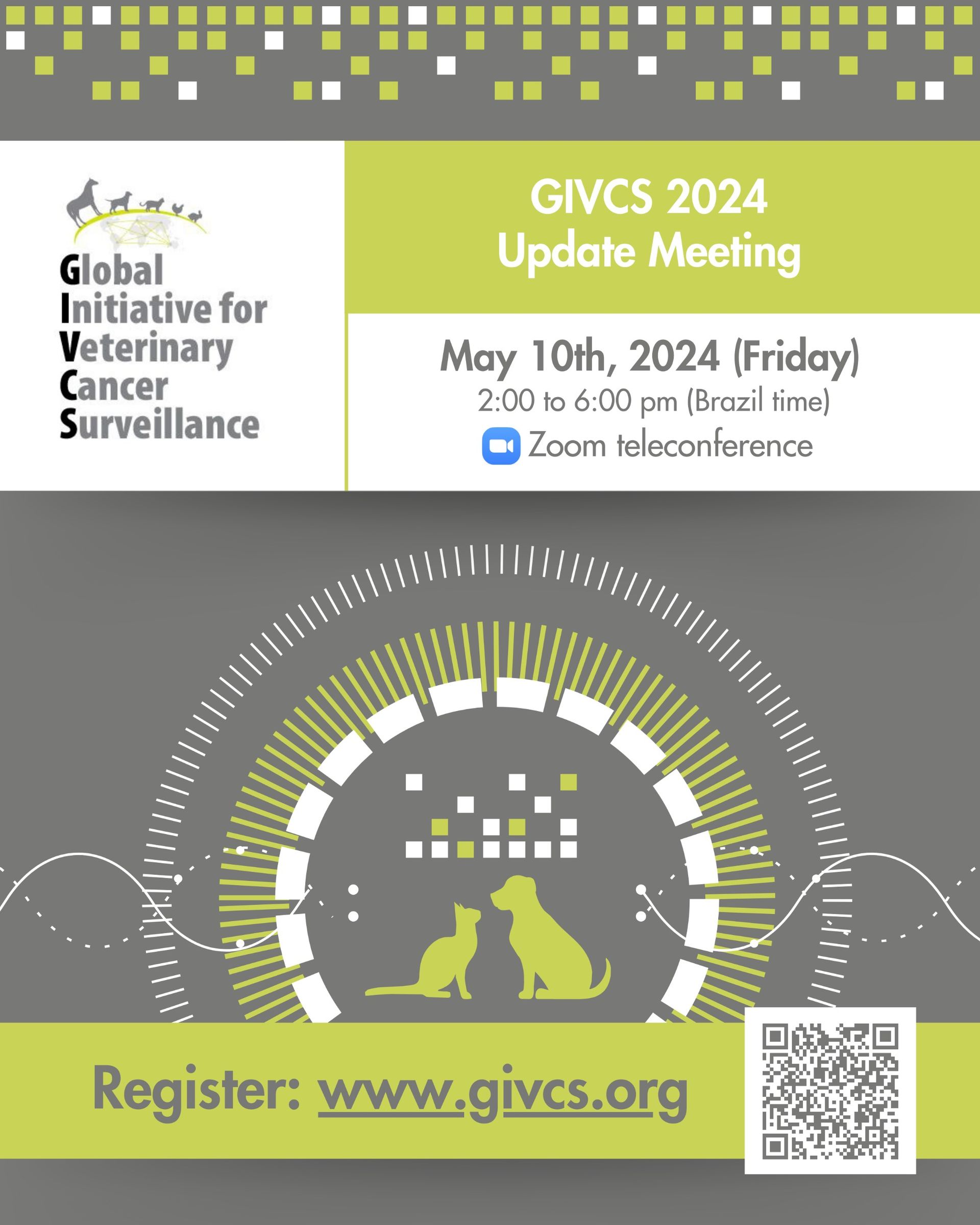
GIVCS Meeting 2024: A Resounding Success!
We extend our heartfelt thanks to all the speakers who participated in the GIVCS Meeting 2024. It was truly inspiring to learn about the various global initiatives in Animal Cancer Registries. The diverse approaches and great results shared are significantly enhancing our collective knowledge in this field.
Don't miss out—watch the recording of this event and be part of our journey towards groundbreaking discoveries!
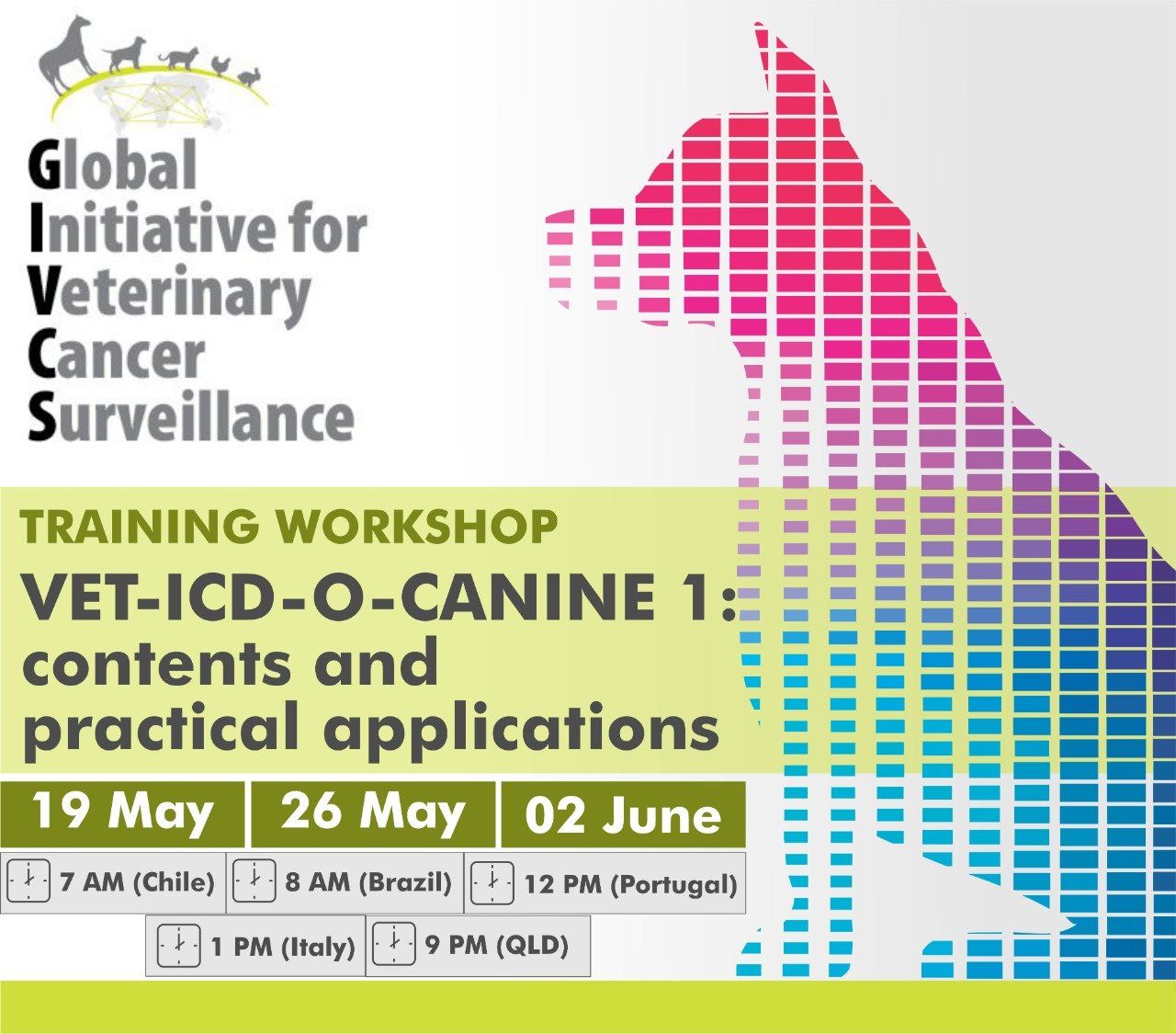
Vet-ICD-O-1-canine Workshop
During the workshop, we had the opportunity to present the Vet-ICD-O-1 Canine Coding System, developed by the GIVCS Coding Group.
The introductory session provided a comprehensive overview of the coding structure, including guidance on how to apply and use the system in practice.
Subsequent sessions were delivered by the pathology working groups responsible for each chapter, with each chapter representing a specific organ system or group of systems.
All recordings are available online. The workshop covers 12 chapters:
- Structure of the codes and general recommendations
- Epithelial and melanocytic tumours
- Genital and urinary tract tumours
- Haematopoietic system tumours
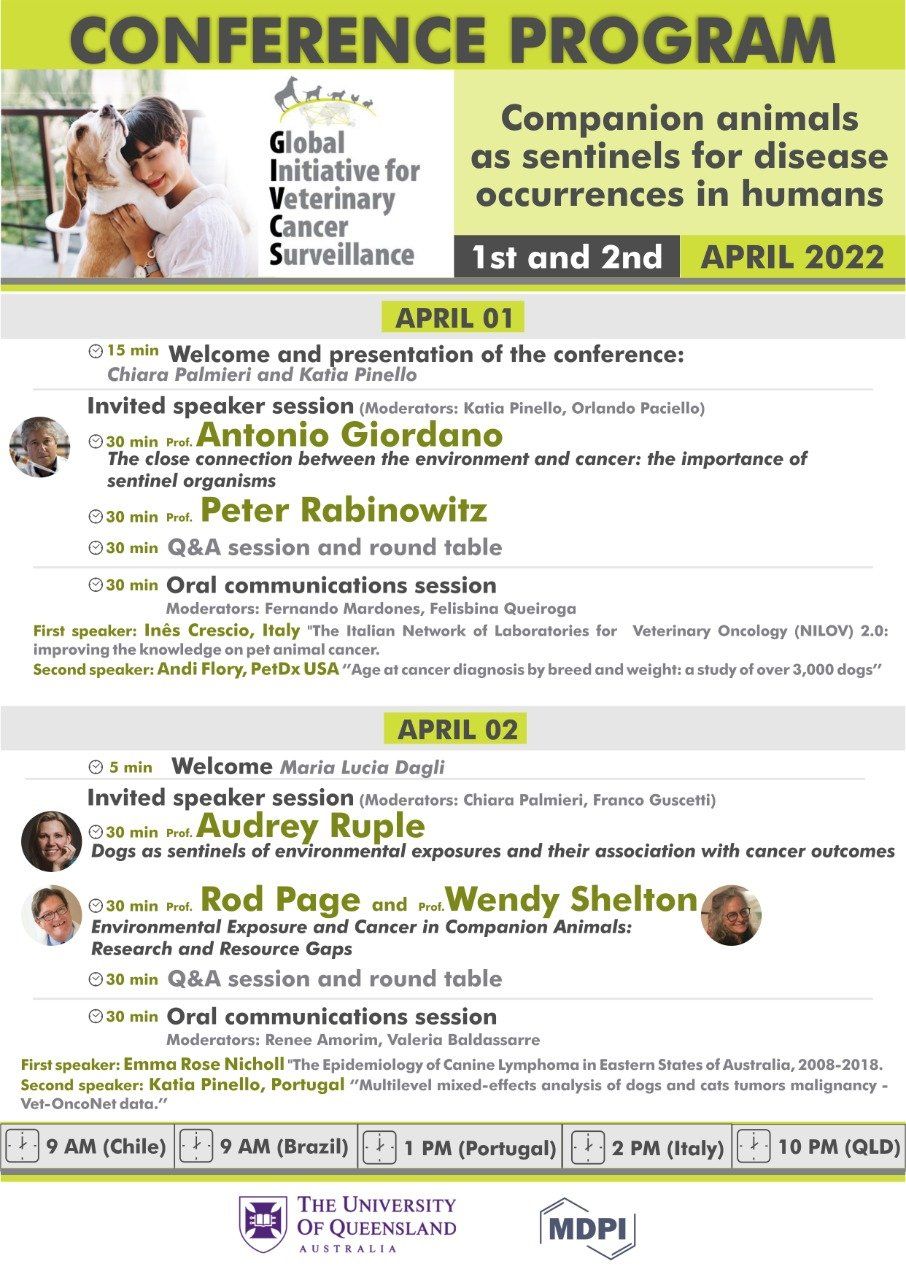
Companion animals as sentines for disease occurrences in humans
During April 1st and 2nd, we had the pleasure of hosting several invited speakers who shared valuable insights on the role of animals as sentinels for human diseases.
We also featured multiple oral presentations from researchers working in the field of animal cancer epidemiology, highlighting current advances and emerging perspectives in this area.
Poster Presentations
Age at cancer diagnosis by breed and weight: a study of over 3,000 dogs
The Epidemiology of Canine Lymphoma in Eastern States of Australia, 2008-2018
Mammary Fibroadenoma in Cats: a matter of classification
The Animal Tumour Registry of Lazio region (Italy): work in progress
A preliminary quantification of general cancer in pets in Chile
Multilevel mixed-effects analysis of dogs and cats tumors malignancy - Vet-OncoNet data.
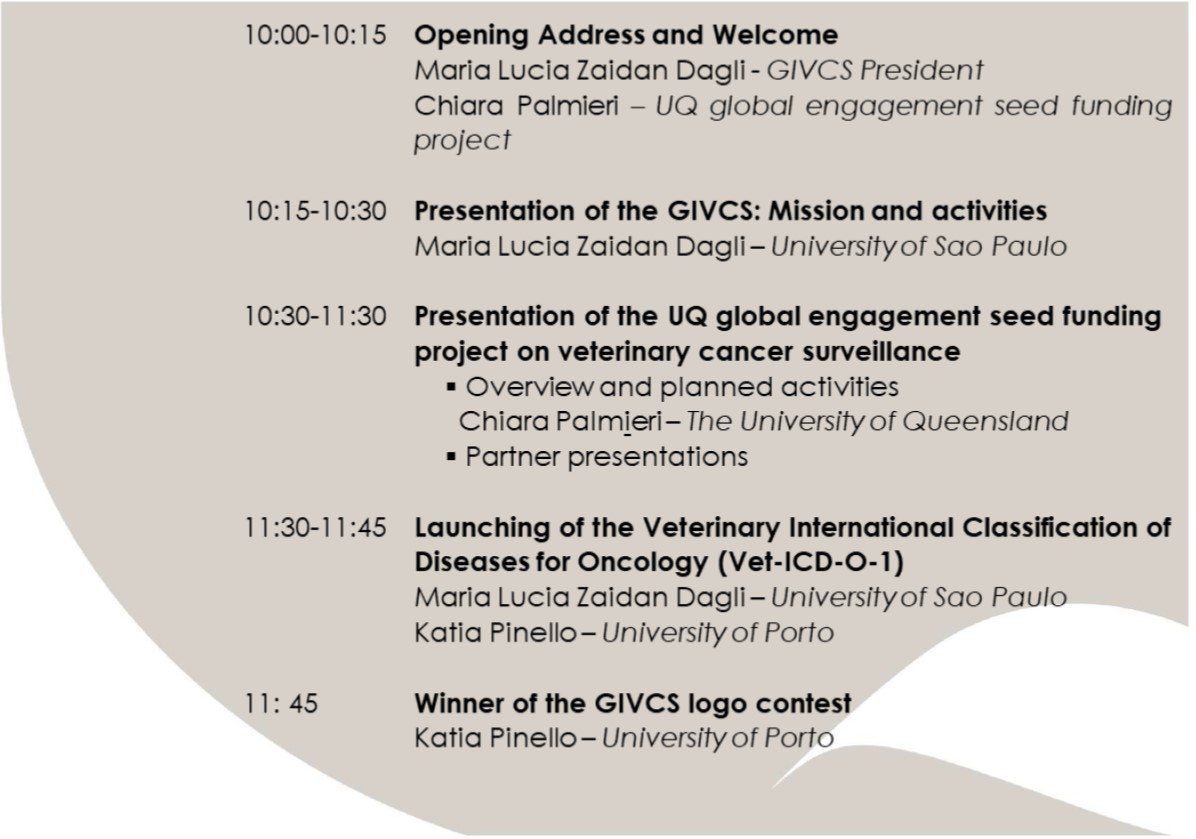
Satellite GIVCS Symposium
Join us in this Satellite GIVCS Symposium held by Prof. Chiara Palmieri from the University of Queensland (UQ), Australia.
It will be the presentationof the UQ Global Engagement Seed Funding Project on Veterinary Cancer Surveillance and the Veterinary International Classification (Vet-ICD-O-1).
Saturday 11 September 2021
Australia: 10 PM AEST (9 AM BRT, 1 PM BST, 2 PM CET)
Full program here
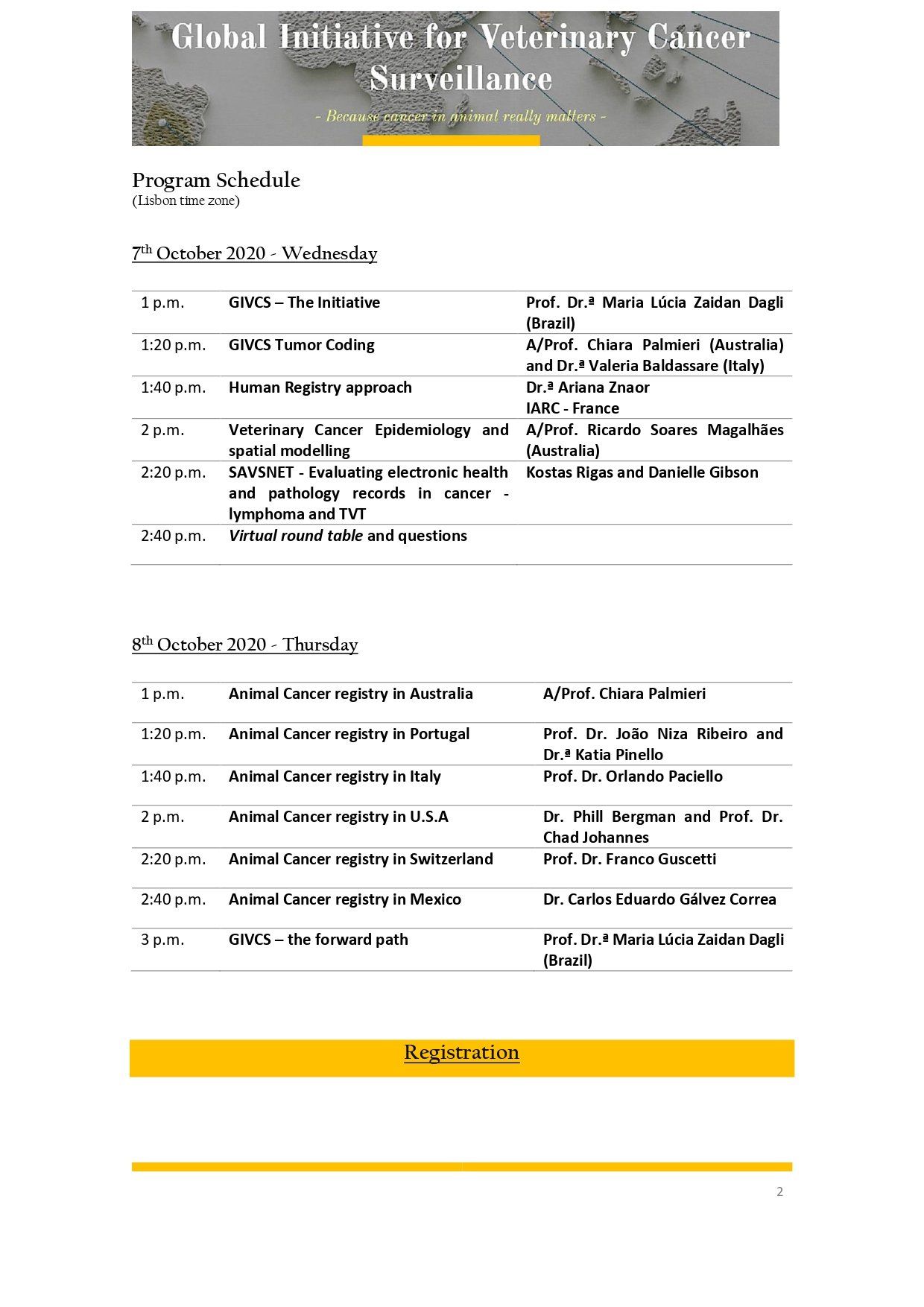
2020 Annual Meeting 7th and 8th October 2020
This year, our 2nd Annual Meeting was held in a webinar fomat with 2 days – 7th and 8th October- starting at 1 p.m. Lisbon time.
The first day was filled with presentations regarding different important aspects to Animal Cancer Registries, such as the classification of neoplasms, the features and approach of Cancer Human Registries, Epidemiology , space modeling, and data management technology.
The second day was dedicated to those responsible for current Animal Cancer Registries initiatives. They will share with us the challenges they face, methodologies and their future.
At the end of each day we will have time for discussion in a virtual round table.
We had:
114 attendants from several countries,
13 speakers from 8 countries
Thanks for joining, and hope you stay tuned on GIVCS activities.
---
Welcome to the 2nd Annual Meeting of the Global Initiative for Veterinary Cancer Surveillance, GIVCS
We would like to welcome you all to the 2nd Annual Meeting of the Global Initiative for Veterinary Cancer Surveillance, GIVCS.
The GIVCS has been initiated as an idea of the late Johan de Vos, a visionary and passionate veterinary oncologist from the Netherlands, and other veterinary oncologists that got together during the 3rd World Veterinary Cancer Congress, WVCC, in Foz do Iguassu, Brazil, in 2016.
Since then, a group of veterinary oncologists, epidemiologists and pathologists decided to put Johan de Vos ideas into practice, and invited colleagues from many parts of the world to join.
Members from Brazil, Portugal, Australia, Italy, Switzerland, Canada, Kenya, Spain, United Kingdom, Romania, Germany, Mexico, Hungary and USA now form the group. Others may join voluntarily or upon invitation.
A website has been created to inform about the mission and objectives of the initiative, and the first Annual Meeting has been held in Sao Paulo, Brazil, on October 2019.
The GIVCS group has been working hard to create conditions to harmonize a coding system suitable for animal neoplasms and to consolidate GIVCS as a unique and global initiative to standardize and guide current and future Veterinary Registries in the collection of information on cancer in animals across the world.
Thanks for joining, and hope you stay tuned on GIVCS activities.
Katia Pinello and Maria L.Z.Dagli
I GIVCS Meeting - 7 - 8th October 2019 - São Paulo/Brazil
The First Meeting and the constitution of the Global Initiative for Veterinary Cancer Surveillance (GIVCS), supported by the Brazilian Association of Veterinary Oncology and NAP-Oncovet was held at the School of Veterinary Medicine of the University of Sao Paulo, Brazil, on October 7th-8th 2019 and was attended by representatives from eight countries:
- Australia - Prof. Chiara Palmieri
- Brazil - Prof. Maria Lúcia Zaidan Dagli and Marcelo Vanucci Tedardi
- Kenya - Dr. Kelvin Momanyi
- Mexico - Dr. Martin Soberano
- Portugal - Prof. Katia Pinello and Felisbina Queiroga
- Switzerland - Dr. Franco Guscetti
- Spain and United Kingdom - José Rodrigues
- USA - Prof. Heather Wilson-Robles
Vet-ICD-O
Veterinary - International Classification of Diseases - Oncology
Vet-ICD-O-1-canine
The GIVCS, in collaboration with the International Agency for Research on Cancer (IARC), developed the Vet-ICD-O-1 Canine Coding System, the first edition dedicated to canine neoplasms.
The system was structured in close alignment with the ICD-O-3.2 classification used in human oncology, ensuring conceptual and structural comparability between veterinary and human cancer registration frameworks.
The primary objective of Vet-ICD-O is to promote global harmonization, enabling veterinary cancer studies worldwide to adopt a standardized coding system and generate comparable epidemiological data.
Access the scientific article, supplementary materials, and recorded videos that provide a comprehensive explanation of the coding structure and practical guidance on its implementation.
General Structure
The Vet-ICD-O is organized into three main components:
- A comprehensive list of topography codes
- A complete list of morphology codes, including synonyms and related terms
- 12 system-based organization designed to facilitate coding
Morphology Codes
The morphology section includes 846 codes, comprising 534 preferred terms, of which 126 are newly created terms specific to canine tumours. In addition, the system includes 248 synonymous terms and 64 related terms.
Topography Codes
The topography list includes 335 codes, of which 26 are exclusive to canine tumours.
To ensure clear differentiation from existing human ICD-O codes, new veterinary-specific topography codes were created by adding a second digit after the decimal point.
System-based lists
To facilitate code identification and navigation, the system is organized into 12 chapters based on organ systems.
Vet-ICD-O-2 in Development
The GIVCS Coding Group is currently developing Vet-ICD-O-2, the next edition of the Veterinary International Classification of Diseases for Oncology.
This updated version will expand species coverage, including revised and updated terminology for dogs, as well as the integration of codes for cats, horses, pigs, and small ruminants.
Vet-ICD-O-2 will be fully aligned with the newly released ICD-O-4 classification in human medicine, ensuring international harmonization and strengthening comparative oncology research within a One Health framework.
Further updates will be announced soon. Stay tuned.
Groups with similar objectives
Veterinary Cancer Guidelines and Protocol
The mission of VCGP is to improve care for animals with cancer through
standardization of tumor evaluation and reporting.